 By rosebell
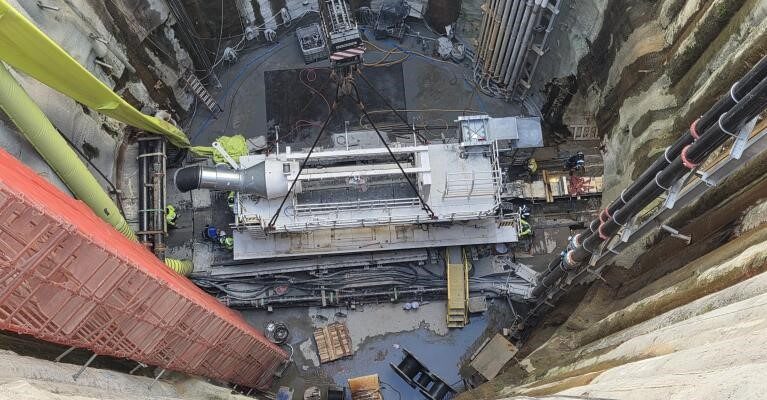
The final gantry has now been lowered into the launch shaft and connected to the machine, completing a 215m-long TBM and back-up system. Mary is being operated by the CBNA-Halmar Clean Rivers JV, which is delivering the 8.9km-long, 5.5m i.d. tunnel under a design-build contract for DC Water. The JV team includes COWI and Hatch.
The machine is tasked with excavating the 3.9km northern section of the tunnel from West Potomac Park towards Georgetown University.
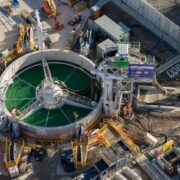
Because of its size and the restricted launch site, the complete TBM could not be lowered into the shaft in one piece. Mary was therefore assembled progressively underground, with individual gantries weighing around 27t lowered by crane and hauled into the tunnel for connection.
The completed back-up train provides the TBM’s power, hydraulic and logistics systems and carries equipment for spoil removal, segmental lining installation and ventilation.
Mary will now excavate approximately 107m before stopping for a changeover from the softer ground encountered near the Potomac River to hard-rock tunnelling. The conversion will take more than two months and will be carried out with the machine remaining underground. It will then continue north towards Georgetown.
A second Herrenknecht TBM, Emily, will excavate the 5km southern drive to connect with the existing Anacostia River Tunnel system. Unlike Mary, which has been configured primarily for the hard-rock conditions on the northern drive, Emily has been engineered for the softer ground conditions to the south.
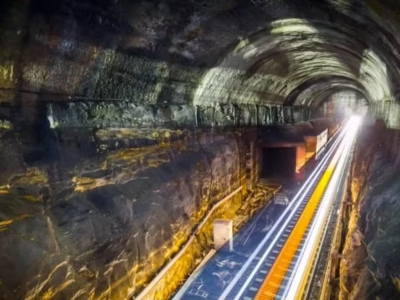
The Potomac River Tunnel includes nine shafts and associated adits and structures and is being constructed at depths of around 30m. Ground conditions along the alignment include clay, alluvium and hard rock.
Part of DC Water’s Clean Rivers Program, the tunnel is designed to reduce combined sewer overflow volumes into the Potomac River by 93%, cutting the number of overflow events from around 74 to four in a typical year.
Completion is scheduled for 2030.