 By rosebell
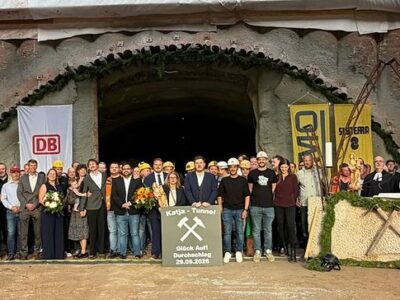
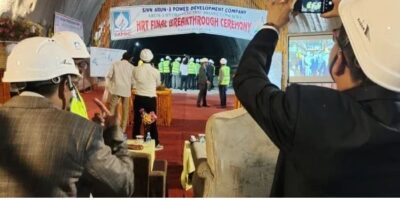
The breakthrough took place on October 2, according to information published by the Qingdao Municipal Government, marking the completion of the final shield-driven section of the project.
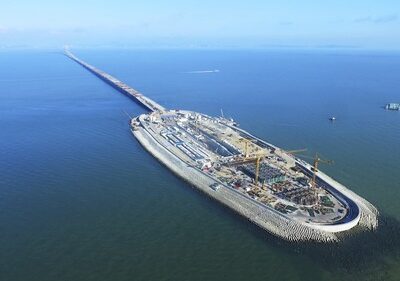
The Second Jiaozhou Bay Tunnel will provide a new road connection between Qingdao’s main urban area and the West Coast New Area in Huangdao, supplementing the existing Jiaozhou Bay Tunnel and cross-sea bridge.
Three TBMs Used on Qingdao Tunnel
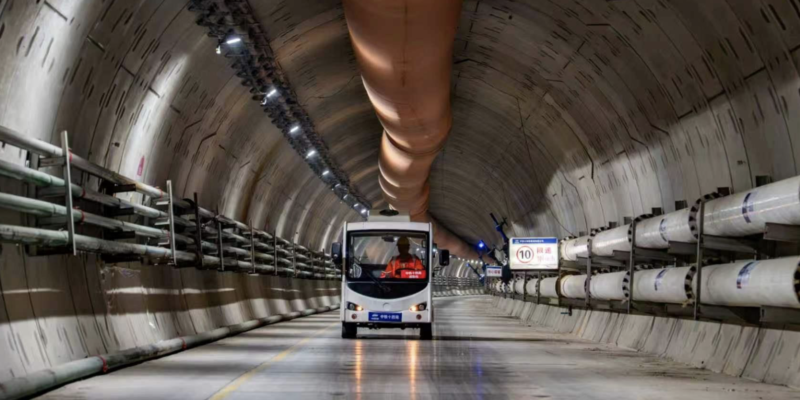
The 17.48km project includes approximately 14.37km of tunnel and comprises two main road tunnels with a central service tunnel. The two road tunnels provide six traffic lanes in total and are designed for speeds of up to 80km/h.
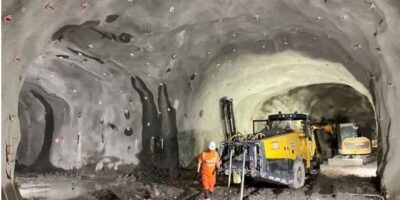
Construction has combined drill-and-blast excavation with mechanised tunnelling, with drives advancing from both the eastern and western shores of Jiaozhou Bay towards offshore connection points.
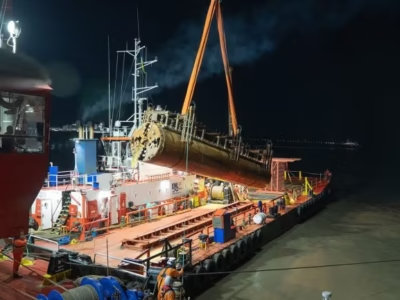
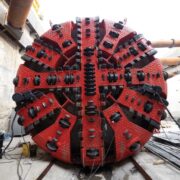
Three TBMs have been deployed on the shield-driven sections. Two machines with diameters of 15.63m are excavating the main road tunnels, while the 8.18m-diameter Guoxin is being used for the central service tunnel.
China Railway 14th Bureau Group has excavated a 3,255m section of the southern main tunnel using TBM Haitian and a 5,855m section of the central service tunnel using Guoxin.
TBMs Tackle High-Strength Rock
The project has encountered challenging geological conditions, with approximately two-thirds of the alignment passing through granite and the remainder mainly through tuff.
More than 80% of the main tunnel shield sections and over 90% of the service tunnel shield section pass through rock formations. Maximum recorded compressive strength has reached 224MPa.
High-strength rock, fractured fault zones and long excavation drives resulted in significant cutter wear. Cutter inspections and replacements were required at average intervals of approximately 20m.
The main road tunnel shield sections reach a maximum depth of 95m below sea level, while the service tunnel reaches 105m, creating demanding conditions for TBM sealing and groundwater control.
TBM Design Modified for Granite Excavation
According to Wang Junping, chief engineer for China Railway 14th Bureau Group on the project, both TBMs were modified to improve performance in the challenging geological conditions.
The modifications included reduced cutter spacing, allowing more cutting tools to be installed on the cutterheads, together with improvements to rock-breaking capacity and excavation efficiency.
A dedicated spoil-handling system comprising a screw conveyor, rock collection chamber and crusher was also introduced to improve muck removal and reduce the risk of blockages.
Automated Production of Tunnel Segments
The high external water pressures and strict watertightness requirements also led China Railway 14th Bureau Group to develop a fifth-generation intelligent production line for large-diameter precast concrete tunnel segments.
The facility uses automated finishing, spraying and mould-cleaning robots alongside heavy-duty automated guided vehicles (AGVs). Digital systems are used to manage segment production and handling.
Shield Excavation Completed
The completion of shield excavation marks a major milestone for the Qingdao Second Jiaozhou Bay Tunnel. Further construction, fit-out and commissioning works remain before the new crossing can enter service.
Once operational, the tunnel is expected to improve connectivity between central Qingdao and Huangdao while helping reduce congestion on existing routes across Jiaozhou Bay.