
 By rosebell
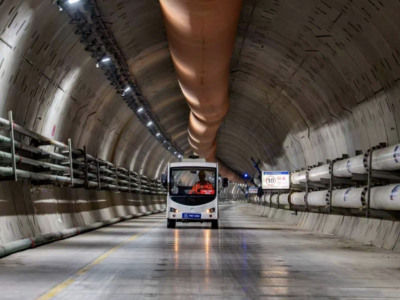
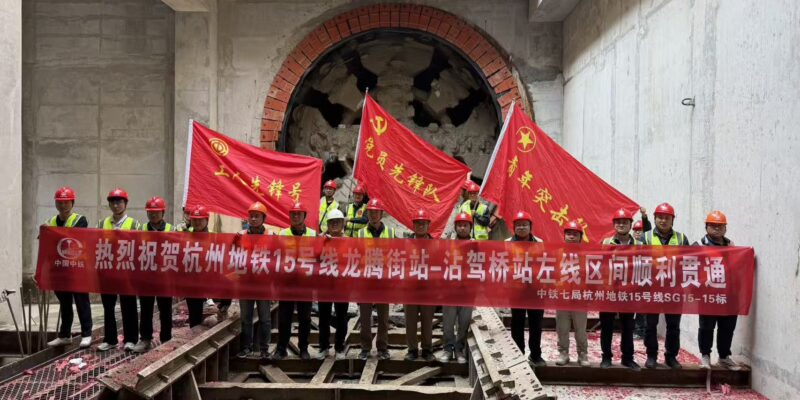
Tunnel boring machine (TBM) Qinlong 31 completed the left-hand tunnel between Longteng Street and Zhanjiaqiao Road stations on 12 October, marking a milestone for contract SG15-15.
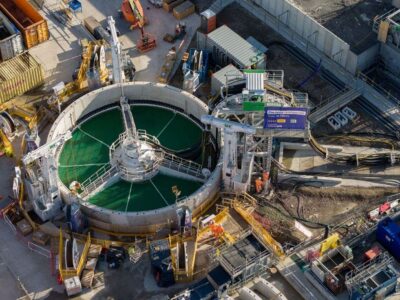
Launched from Longteng Street Station on 3 April, the machine navigated complex underground conditions involving existing roads, residential developments, waterways and the Nanjing–Hangzhou high-speed railway.
TBM cuts through existing foundation obstructions
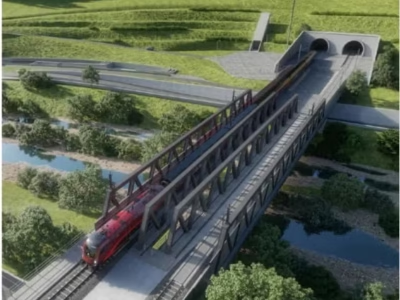
The most challenging section involved tunnelling beneath an operational high-speed railway viaduct, where eight existing road sheet-pile elements obstructed the tunnel alignment.
Instead of removing the obstructions before excavation, the project team adopted an in-situ cutting technique that enabled the TBM to cut directly through the piles while protecting the railway’s supporting structures.
The operation required precise identification of pile locations, optimisation of cutterhead parameters and continuous adjustments to excavation rates as the machine passed through the affected ground.
The railway undercrossing was completed in July. During the 18-day operation, the TBM installed 69 segment rings without interrupting high-speed railway services. According to the contractor, ground settlement remained within permitted limits, and no safety warnings were triggered.
The technique is reported to be the first application in China of direct TBM pile cutting under the combined conditions of an operational high-speed railway viaduct and existing road sheet-pile obstructions.
Intelligent monitoring manages tunnelling risks
To control risks during excavation, the project team used an intelligent construction management platform to monitor TBM operating parameters, synchronous grouting, ground movement and machine alignment.
Ground improvement measures and enhanced settlement monitoring were also implemented. The team adjusted soil conditioning and grouting operations to maintain ground stability throughout the railway undercrossing.
Parallel tunnel excavation continues
The parallel right-hand tunnel is being excavated by Qinlong 32, a 6.47m-diameter earth pressure balance machine (EPBM), along a 768.2m drive.
The alignment includes a minimum curve radius of 380m and nine existing pile obstructions. Qinlong 32 passed beneath the Nanjing–Hangzhou high-speed railway in September, with excavation of the remaining section continuing.
The project team said the successful use of in-situ pile cutting could provide a reference for future metro tunnelling projects beneath operational high-speed railway infrastructure, particularly where existing foundations cannot readily be removed.