 By rosebell
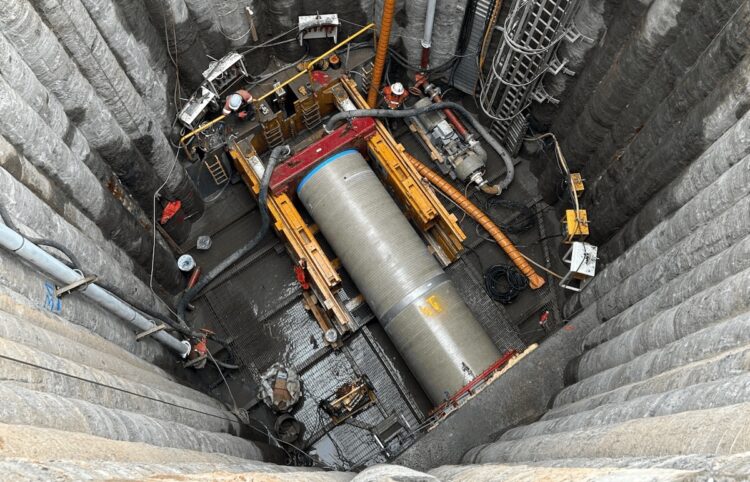
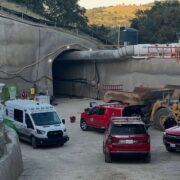
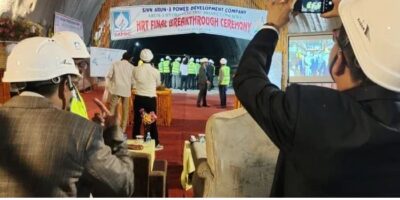
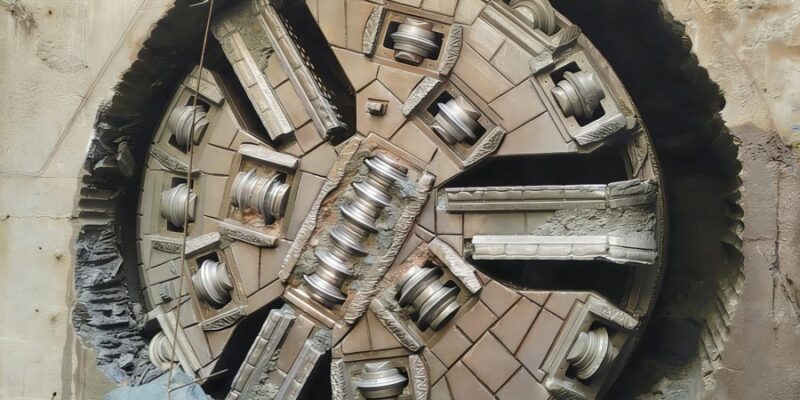
The tunnel boring machine (TBM), operated by J Kumar–MEPL JV, made its final breakthrough on 9 October at Don Bosco Junction, near Borivali West. The machine was launched in January 2024 from the Malad Shaft S07 Pumping Station.
The drive was completed in two sections. The first 1.63km section, extending to Malad West, was completed in August 2024. The TBM then continued excavation along the remaining 4.22km, passing the 4.5km mark in January 2026 before reaching its final breakthrough point.
Tunnelling through challenging urban conditions
The TBM advanced beneath densely developed areas of Mumbai, passing under busy roads, buried utilities, residential and commercial buildings, and environmentally sensitive locations.
The alignment traversed weathered and fresh breccia and basalt. In fresh rock, the machine achieved advance rates of up to 18 rings per day. Continuous monitoring of the tunnel alignment and ground movement helped control surface settlement and protect surrounding infrastructure.
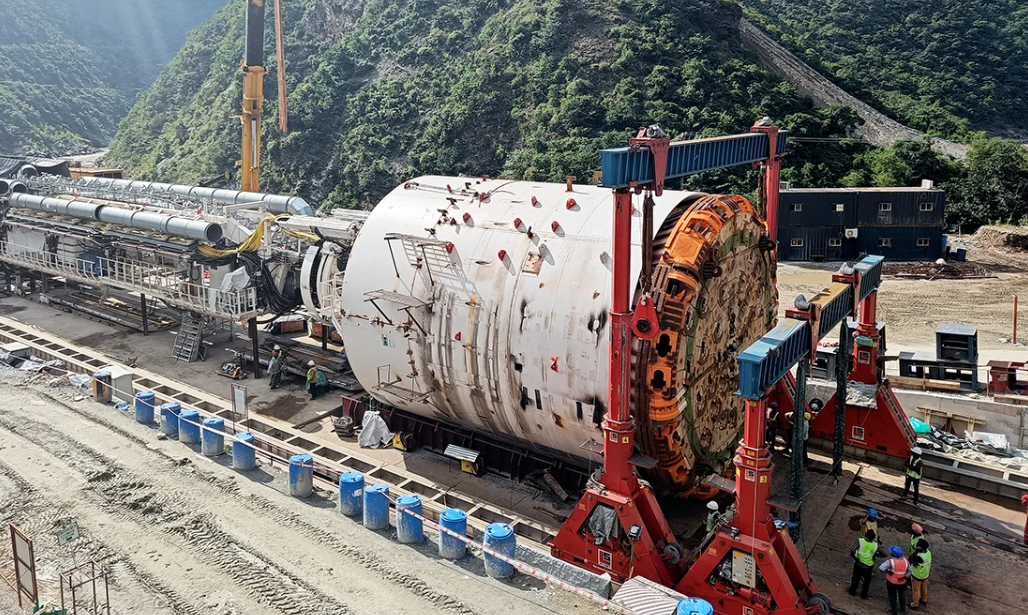
One of the smallest machines of its type deployed in India, the 3.85m-diameter TBM uses a slurry system to maintain face pressure. Excavated material is transported to the surface through TERRATEC’s Slurry Transportation System and processed at its Slurry Treatment Plant.
The machine is equipped with 23 replaceable 381mm disc cutters, a high-speed hydraulic main drive capable of rotating the cutterhead at up to eight revolutions per minute, a shield-integrated man lock and an active articulation system designed to negotiate curves with a minimum radius of 250m.
The tunnel lining comprises 5+1 universal reinforced concrete segments, each 200mm thick and 1,200mm wide, providing a finished internal diameter of 3.2m.
TERRATEC supplies second TBM for Mumbai sewer programme
In addition to the PST-1 machine, TERRATEC supplied a 3.14m-diameter rock EPB TBM for the 4.7km Priority Sewer Tunnel 2 (PST-2).
In 2025, the EPB machine achieved a first for India by negotiating an 87m-radius curve beneath a busy road junction without the need for an intermediate shaft. The machine is now being dismantled.
Supporting Mumbai’s wastewater infrastructure
Once operational, PST-1 will form an important part of Mumbai’s upgraded wastewater network, conveying sewage to downstream treatment facilities and enabling ageing pumping stations to be decommissioned.
The wider MSDP programme is expected to provide capacity to treat and recycle 2,464 million litres of sewage per day. It is also intended to reduce the discharge of untreated wastewater into local waterways and the Arabian Sea, while supporting the rejuvenation of the Mithi and Oshiwara rivers.