 By rosebell
During excavation, the TBM encountered granite and gneiss with a maximum uniaxial compressive strength of 207.3 MPa and a quartz content ranging from 26.6% to 42%. These conditions placed considerable demands on the machine’s cutting tools and excavation systems.
The alignment also crossed multiple fault fracture zones characterised by fragmented and unstable rock, increasing the risks of ground collapse and groundwater ingress.
Customised TBM Design for Challenging Ground
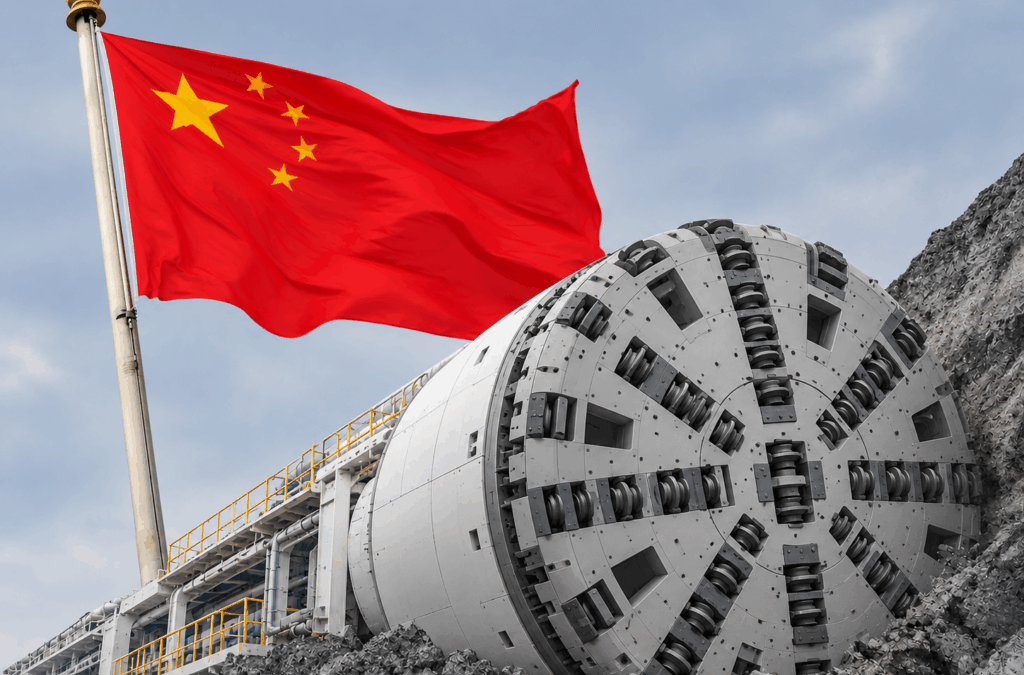
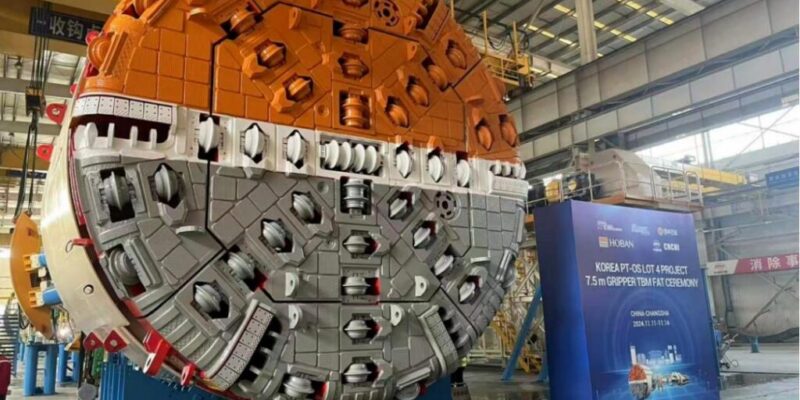
To address the demanding geological conditions and accommodate underground assembly, CRCHI conducted several design reviews to develop a customised gripper TBM for the project.
The machine incorporates several features designed to support excavation in hard rock, including:
- High-power cutterhead drive for demanding rock conditions.
- Heavy-duty, wear-resistant disc cutters to withstand abrasive granite and gneiss.
- High-capacity thrust system to provide the required excavation forces.
- Efficient muck removal system to support continuous excavation.
- Modular structural design to facilitate underground assembly and improve operational reliability.
The customised design was developed to meet the project’s geological requirements while addressing the logistical challenges associated with assembling the machine underground.
On-Site Technical Support
CRCHI provided dedicated on-site technical support throughout the operation. Its service team worked around the clock on a two-shift basis to support TBM operations and help maintain equipment performance under challenging ground conditions.
The successful completion of the drive marks a milestone for CRCHI’s first gripper TBM exported to South Korea.
The Pyeongtaek–Osong twin-track tunnel forms part of South Korea’s high-speed railway network expansion and is intended to increase capacity on the country’s high-speed rail system.