
 By rosebell
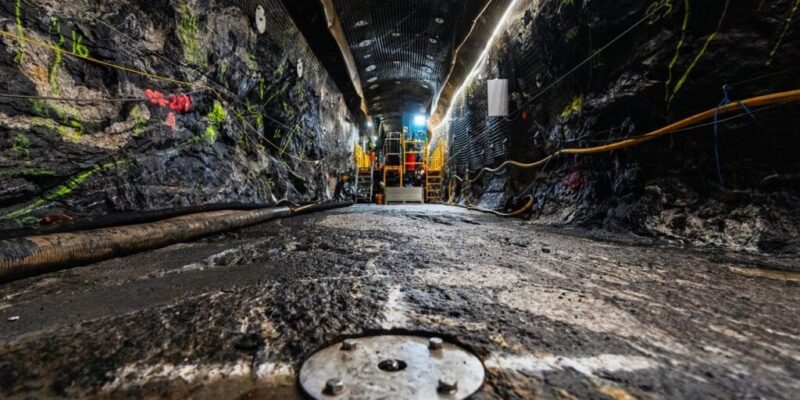
Work on the first production deposition hole began on 26 August at a depth of more than 400m, marking the transition from previous test boring to holes that could ultimately receive spent-fuel disposal canisters.
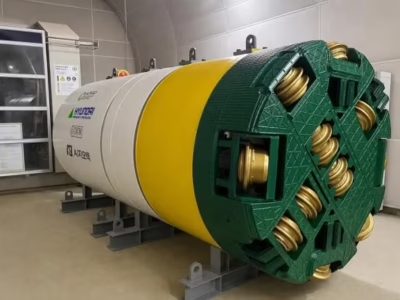
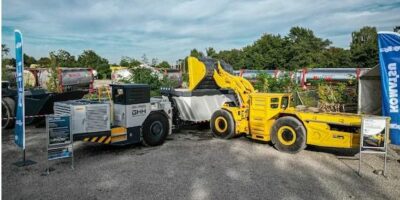
The holes are being excavated using a purpose-built Herrenknecht Deposition Hole Boring Machine (DHBM). The 78t machine is approximately 9m long, more than 3m wide and almost 4m high. It is supported by a 22t energy unit and an 18.5t separator used to remove excavated rock fragments from the drilling water.
Each vertical deposition hole is bored into the floor of a previously excavated disposal tunnel and will be 8.4m deep and 1.75m in diameter. Despite the large dimensions, Posiva requires the centre of the hole to remain within 25mm of its vertical centre line over its full depth.
The DHBM continuously monitors its position during excavation, with control cylinders allowing corrections to be made if deviations are detected. Any hole exceeding the specified tolerance will be rejected for disposal use.
According to Posiva construction manager for operations Kimmo Lehtola, boring an 8m-deep hole requires around 10 hours of effective drilling time, although positioning and removing the machine, cleaning and drying the excavation and moving equipment between locations considerably increases the overall cycle time.
Once full production is established, Posiva is targeting approximately two completed deposition holes per working week.
The DHBM arrived at Olkiluoto from Germany in 2022. A crew from the machine supplier initially bored test deposition holes in ONKALO, before Posiva personnel continued the programme with assistance from the supplier.
The first production campaign is being undertaken with all five DHBM operators and two rotating supervisors present. Three operators already have previous drilling experience, while the remaining two are being trained during the initial production work. Normal production crews are expected to comprise three people.
The first disposal tunnel is approximately 330m long and is planned to contain around 30 deposition holes.
Posiva said the initial holes will undergo enhanced geometric and quality inspections before series production begins. At least the first three holes will be individually measured immediately after completion.
Only after the verification process has been completed will Posiva confirm that the first hole has been accepted for the actual final disposal of a spent nuclear fuel canister.
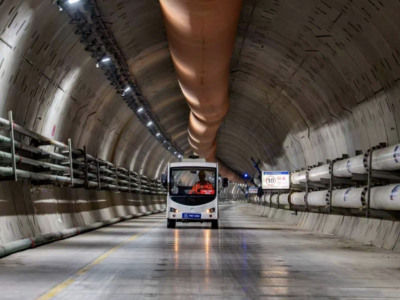
ONKALO is being developed in the bedrock beneath the Olkiluoto nuclear power station for the permanent geological disposal of spent nuclear fuel. The start of production deposition-hole boring represents a significant step towards the repository moving from construction and commissioning into disposal operations.