
 By rosebell
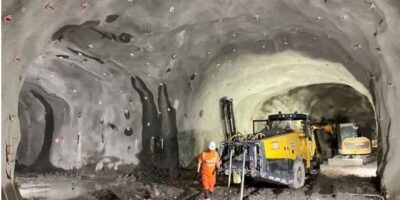
Hyundai E&C has successfully excavated a spent nuclear fuel deposition hole in rock at an underground research tunnel, using equipment developed through its HMG Construction Technology Research Institute.
The demonstration forms part of a government-funded research and development programme on spent nuclear fuel management led by the Korea Radioactive Waste Agency (KORAD). The work supports the development of the Korea Advanced Disposal System (KORADIS).
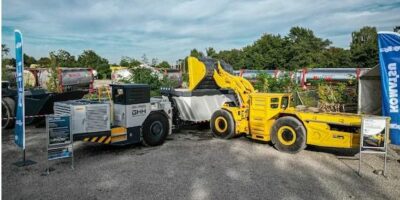
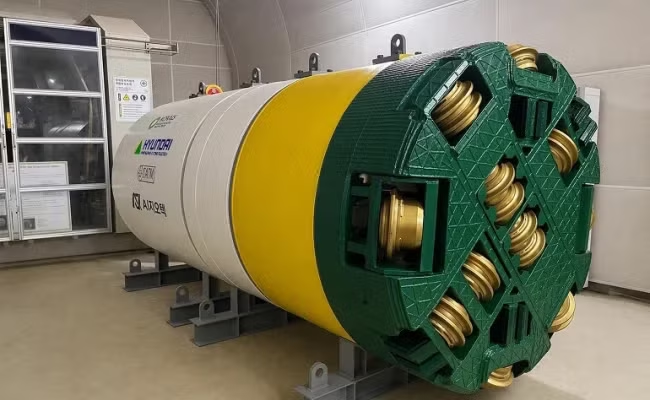
The dedicated excavation equipment measures 1.75 metres in diameter and 5.7 metres in length. Its key feature is a foldable cutterhead, which allows the cutting assembly to be retracted after excavation so the equipment can be safely recovered and reused for subsequent holes.
AI and Digital Technologies Support Excavation
During the demonstration, artificial intelligence analysed excavation data in real time to assess ground conditions and help optimise excavation operations. Following excavation, LiDAR-based digital mapping was used to inspect the hole and verify construction quality.
Hyundai E&C is also developing supporting technologies for geological disposal facilities, including specialised concrete and grout to improve engineered-barrier performance and control groundwater inflow. Additional research covers rock classification adapted to Korean geological conditions, digital rock assessment and long-term monitoring.
According to the HMG Construction Technology Research Institute, Hyundai E&C is the first South Korean company to develop dedicated deposition-hole excavation equipment and verify its performance through full-scale excavation in rock.
The technologies are intended to support the construction and long-term safety of geological disposal facilities for spent nuclear fuel.