 By rosebell
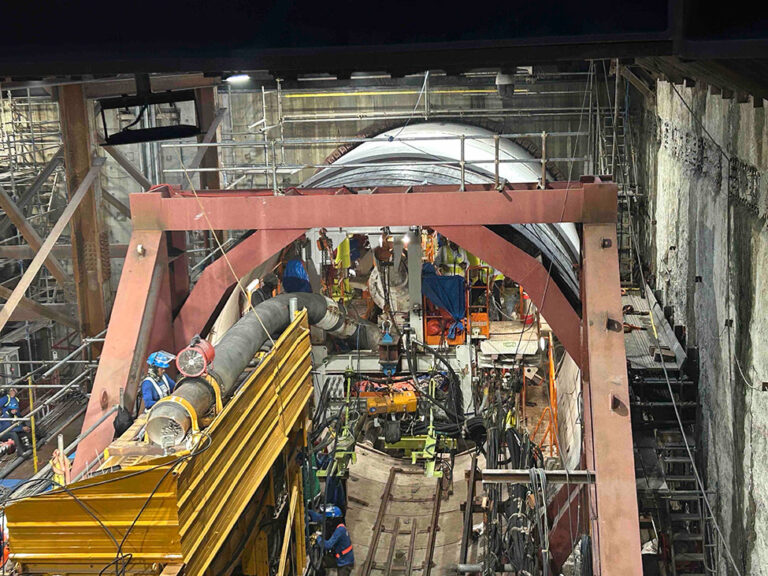
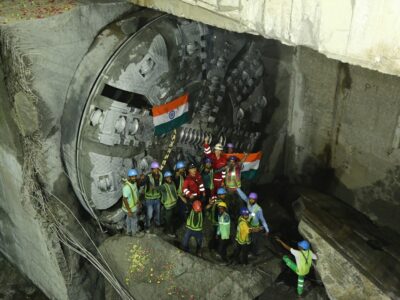
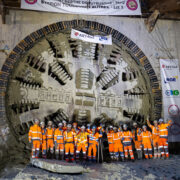
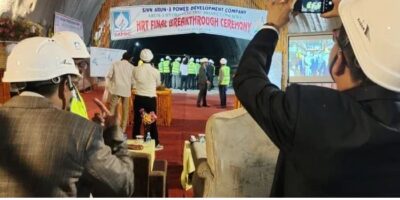
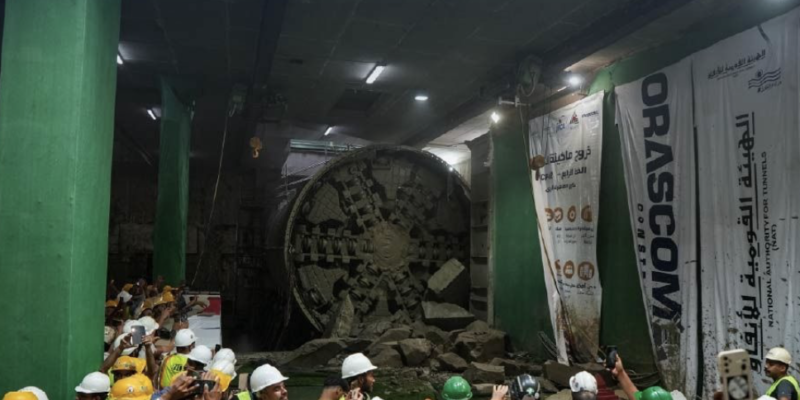
A third tunnel boring machine (TBM) has completed its drive on Phase 1 of Cairo Metro Line 4 in Egypt. The machine, operated by Arab Contractors, broke through on the section between Al-Ahram and Al-Messaha stations.
The breakthrough was attended by Transport Minister Kamel El Wazir, who provided an update on tunnelling progress and the wider development of the metro line.
Six TBMs deployed on Phase 1
Phase 1 of Cairo Metro Line 4 extends for approximately 19km and comprises 17 stations: 16 underground and one surface station. The route begins west of the Ring Road, near 6th of October City, and passes through the Grand Egyptian Museum, Remaya Square and Al-Haram Street before reaching Giza Station. It then continues towards El-Malek El-Saleh Station and terminates at Fustat Station.
Construction is being undertaken by Egyptian contractors, including Arab Contractors, Orascom Construction, Concord, Petrojet and Hassan Allam Construction. Six TBMs are being deployed on the first phase.
Before the latest breakthrough, two other machines had completed their drives. Concord’s TBM finished tunnelling between Hadayek Al-Ashgar and Al-Ahram stations, while the machine operated by Hassan Allam completed its drive between Al-Ahram and Al-Messaha stations.
According to the transport minister, Petrojet’s TBM was scheduled to complete its drive before the end of November. Orascom Construction’s machines will continue excavation on the second of the parallel drives between Fustat and Al-Messaha stations.
Progress on the remaining phases
Cairo Metro Line 4 is planned for delivery in four phases. Construction has also begun on Phase 2, which will extend 26.9km from Fustat to New Cairo and include 21 stations. Station sites are currently being handed over to the construction companies.
Studies are under way for the remaining two phases. Phase 3 is planned to connect Hadayek Al-Ashgar with Al-Hossary Square, while Phase 4 will extend the network from New Cairo to Capital International Airport.
Once completed, the four-phase scheme will expand rail connectivity across Greater Cairo and provide additional public transport links between residential districts, major destinations and the new administrative capital.