 By rosebell
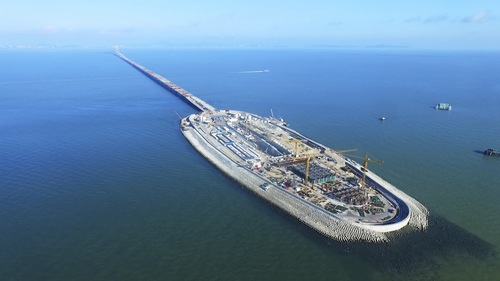
The project’s 14.37km main tunnel section forms the core of the 17.48km scheme, which will connect Qingdao’s main urban area with the Qingdao West Coast New Area.
Qingdao Jiaozhou Bay Second Tunnel Breakthrough
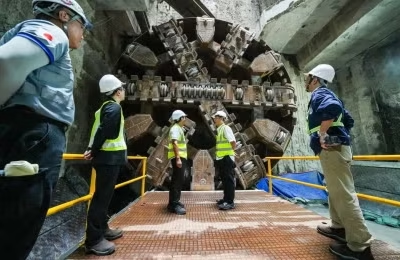
The latest breakthrough was achieved beneath Jiaozhou Bay after tunnelling crews advanced from both the eastern and western shores and completed the underground connection beneath the sea.
According to Wang Junping of China Railway 14th Bureau Group Corporation, the project combined drill-and-blast excavation and shield tunnelling methods to construct the complex subsea route.
The main tunnel reaches a maximum depth of approximately 95m below the sea surface, while the service tunnel extends to around 105m, creating significant water pressure and requiring stringent sealing and waterproofing measures.
14.37km Main Tunnel
The main tunnel section is approximately 14.37km long and consists of two road bores and a service tunnel.
The completed road tunnels will provide three lanes in each direction, with a design speed of 80km/h. The overall project, including associated sections, has a total length of approximately 17.48km.
Once operational, the tunnel will provide a major new cross-bay connection between Qingdao’s main urban area and the West Coast New Area.
Advanced Tunnelling Technology
The Qingdao Jiaozhou Bay Second Tunnel project has employed several technologies to address the challenging subsea ground and water-pressure conditions.
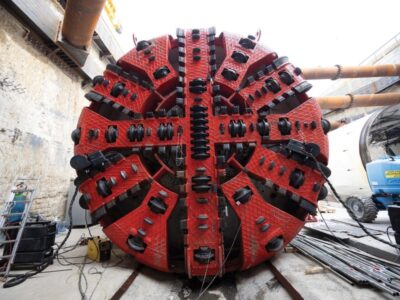
To improve excavation efficiency and reduce the risk of blockages, the tunnelling team developed a new muck discharge system integrating a screw conveyor, rock crusher box and rock crusher.
Anti-vibration technology was also developed for the shield body to improve machine stability during excavation.
The combination of shield tunnelling and drill-and-blast methods allowed construction teams to tackle different geological and engineering conditions along the route.
105m-Deep Subsea Tunnel
The depth of the tunnel beneath Jiaozhou Bay is one of the project’s key engineering challenges. The service tunnel reaches approximately 105m below sea level, while the main shield tunnel reaches around 95m.
At these depths, high external water pressure makes tunnel sealing and waterproofing critical to maintaining excavation and long-term structural performance.
New Cross-Bay Transport Link for Qingdao
The new tunnel will become part of a wider multi-level cross-bay transport network in Qingdao.
Together with the existing Jiaozhou Bay Tunnel, Jiaozhou Bay Bridge and Jiaozhou Bay Highway, the new route will strengthen connections between different parts of the city and improve cross-bay transport capacity.
The project is also being developed as part of wider improvements to China’s integrated transport infrastructure.
China’s Integrated Transport Development
In July, China issued a plan for developing a modern integrated transport system during the 15th Five-Year Plan period from 2026 to 2030.
The plan aims to improve connections between different transport modes, make passenger transfers more convenient and enhance freight logistics services. It also promotes greater integration between transport and tourism, improved transport hub services and stronger rural passenger, freight and delivery networks.
The completion of the Qingdao Jiaozhou Bay Second Tunnel represents another major step in expanding China’s high-capacity road and transport infrastructure.