 By rosebell
The future of Canada’s C$8.5bn (approximately US$6.1bn) Fraser River immersed-tube tunnel project is uncertain following a change in British Columbia’s political leadership, with the incoming Conservative government favouring a 10-lane bridge instead.
The proposed eight-lane tunnel beneath the Fraser River would replace the existing George Massey Tunnel on Highway 99, providing a new crossing between Richmond and Delta, south of Vancouver.
Lorne Doerkson, leader of the British Columbia Conservative Party, announced on 15 October that a Conservative government would pursue a 10-lane bridge rather than proceed with the immersed-tube tunnel scheme developed by the previous NDP administration.
In his announcement, Doerkson criticised the previous government for abandoning an earlier bridge proposal and said the alternative would reduce journey times by up to 30 minutes and improve the movement of goods.
The proposal has created uncertainty around a tunnel project that has already entered early construction and procurement.
The British Columbia Ministry of Transportation and Transit increased the tunnel project’s estimated budget to C$8.5bn in July 2026. The federal government has committed up to C$3bn towards its construction.
The proposed crossing would provide three general traffic lanes and one dedicated transit lane in each direction, alongside a separated corridor for pedestrians and cyclists.
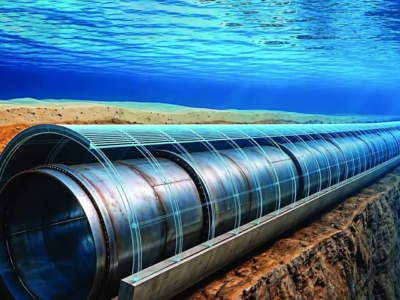
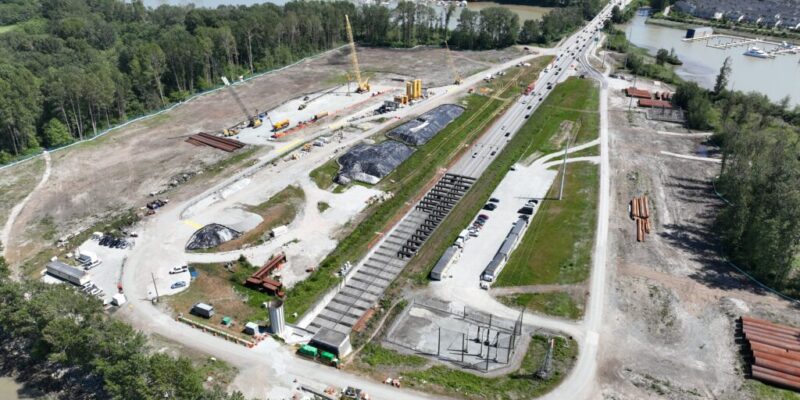
The immersed-tube tunnel would be constructed using reinforced-concrete elements manufactured in a purpose-built casting basin on Deas Island. The completed elements would then be transported and immersed in a prepared trench across the Fraser River.
Early construction work began in January 2026, including utility relocations, site clearance, access roads, retaining walls and preparations for the casting basin. Temporary infrastructure includes three jetties and a trestle bridge providing access to Deas Island.
The project had already undergone a major procurement change in June 2026, when the provincial government ended its design and early works agreement with Cross Fraser Partnership after the two parties failed to reach agreement on the commercial terms for final construction.
The remaining work was subsequently divided into five procurement packages to encourage competition and provide opportunities for local contractors. Requests for qualifications for the first two packages were issued in June, with contractor selection originally expected in early 2027.
Under the previous government’s programme, major tunnel construction was scheduled to begin in 2027, with completion targeted for September 2031.
The political transition has since put the project’s future under further scrutiny. On 12 November, Doerkson called on the outgoing government to halt work that could prevent a switch to a bridge, while allowing necessary activities to continue until a final decision was made.
On 19 November, British Columbia’s Environmental Assessment Office paused its review of the tunnel project at the province’s request, allowing the incoming administration to establish its priorities and provide further direction.
The pause does not, by itself, amount to formal cancellation of the tunnel project. However, the incoming government’s preference for a bridge raises questions about the future of the existing procurement packages, preparatory construction works and the investment already made in developing the immersed-tube design.
A final decision on the replacement crossing and a revised construction programme have yet to be confirmed.