
 By rosebell
The JV will support Transport Infrastructure Ireland (TII) with procurement and delivery of the 18.8km MetroLink, including programme management, governance, risk management and coordination of interfaces between the scheme’s multiple major contracts. Ramboll and Nicholas O’Dwyer will support the JV.
MetroLink will create Ireland’s first fully segregated metro railway, running between Estuary, north of Swords, Dublin Airport and Charlemont in Dublin city centre. The route will have 16 new stations and will be predominantly underground.
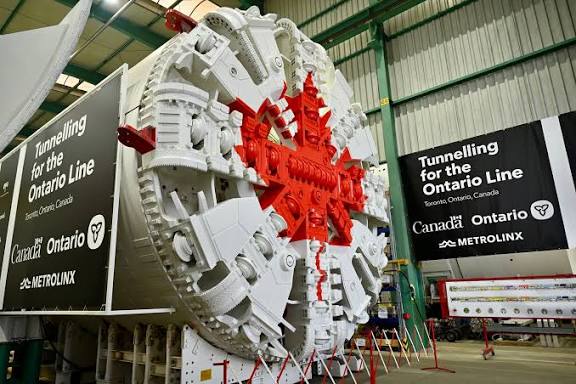
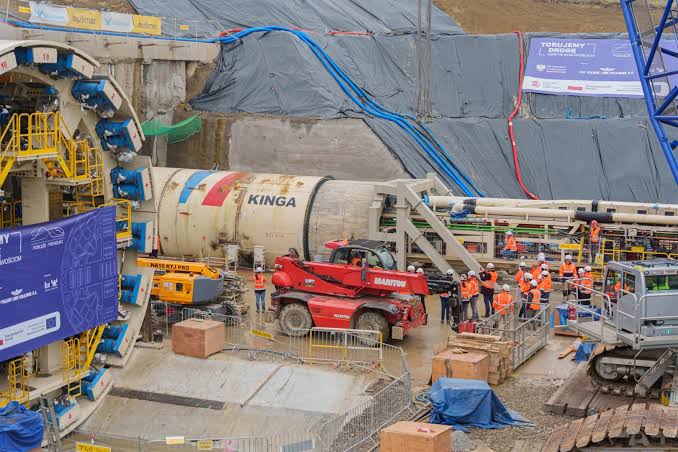
Tunnelling forms the centrepiece of the scheme. The approved alignment includes approximately 9.4km of single-bore tunnel between Northwood and Charlemont beneath Dublin and a separate approximately 2.3km bored section beneath Dublin Airport. The single tunnel will be approximately 9.5m diameter and will accommodate tracks for trains travelling in both directions.
The main underground civil works are being procured through two major design-and-build packages, M401 and M402, for which TII launched procurement in February.
The southern M401 package covers the section from Charlemont to Northwood and includes the principal city-centre bored tunnel, portals and evacuation/intervention shafts. It also includes excavation and shell-and-core construction for ten underground stations at Charlemont, St Stephen’s Green, Tara, O’Connell, Mater, Glasnevin, Griffith Park, Collins Avenue, Ballymun and Northwood. Station excavations will extend to depths of up to 35m.
M402 covers Northwood to Estuary and includes the bored tunnel beneath Dublin Airport, tunnel portals and evacuation/intervention shafts, together with stations at Dardistown, Dublin Airport, Fosterstown, Swords Central, Seatown and Estuary. North of the airport, the alignment transitions to retained-cut, cut-and-cover and surface sections.
The combined contract notice value for M401 and M402 is €3.347bn excluding VAT. TII said the packages collectively cover the project’s heavy civil engineering, including tunnelling, station construction, track alignment preparation, bridges, viaducts and other structures.
Advance works are also being procured separately. These include construction of the Dublin Airport station box and tunnel portals under the M120 framework, allowing key elements to be delivered ahead of the main tunnelling works.
The Programme Delivery Partner appointment comes as TII moves MetroLink from planning into procurement following the Railway Order becoming operative in January 2026. Procurement is also under way for the M500 design, build, finance, operate and maintain contract covering trains, signalling, track, railway systems, station fit-out and operation and maintenance of the metro for 25 years.
AECOM Chief Executive for Europe and India Richard Whitehead said the JV would bring its programme management and international metro experience to the project.
“Our selection for such an important megaproject reflects AECOM’s leadership in delivering complex, multi-billion-dollar programmes around the world,” he said.
Jacobs Executive Vice President and General Manager Europe Richard Sanderson said the company would draw on experience delivering major transport programmes to help TII manage interfaces, complexity and risk across MetroLink.
“MetroLink represents a once-in-a-generation opportunity to transform how people move throughout Dublin and support the region’s future growth,” he said.
When operational, MetroLink is designed to carry up to 20,000 passengers per hour in each direction, with services capable of operating at intervals of as little as 90 seconds as demand increases. The line will connect Dublin Airport with the city centre in around 20 minutes and provide interchange with Irish Rail, DART, Luas and bus services.