 By rosebell
The installation of the first special element for the 18km Fehmarnbelt immersed-tube tunnel between Denmark and Germany has been postponed after contractor Femern Link Contractors (FLC) identified damage to a rubber sealing gasket on the previously installed tunnel element.
Project owner Femern A/S confirmed on 13 November that the damage was discovered during preparations to immerse the fifth tunnel element, which will be the first of ten special elements incorporated into the tunnel.
An investigation found that the damage was mostly superficial. Repair work is underway, and immersion is expected to proceed once the gasket has been repaired and suitable weather conditions return.
According to Femern A/S, the damage may have occurred during cleaning and preparation of the tunnel trench, although its precise cause has not been established.
The rubber gasket is a critical component of the immersed-tube connection system, providing a watertight seal between adjacent concrete elements. It must be repaired before the next element can be connected to the existing tunnel structure.
The first special element measures 39m long, 47m wide and 13m high. Although considerably shorter than the standard 217m-long elements, it incorporates an additional basement level for electrical and other technical installations.
Ten special elements will be installed at intervals of approximately 2km along the tunnel. They will include facilities at road level where maintenance vehicles can stop without obstructing motorway traffic.
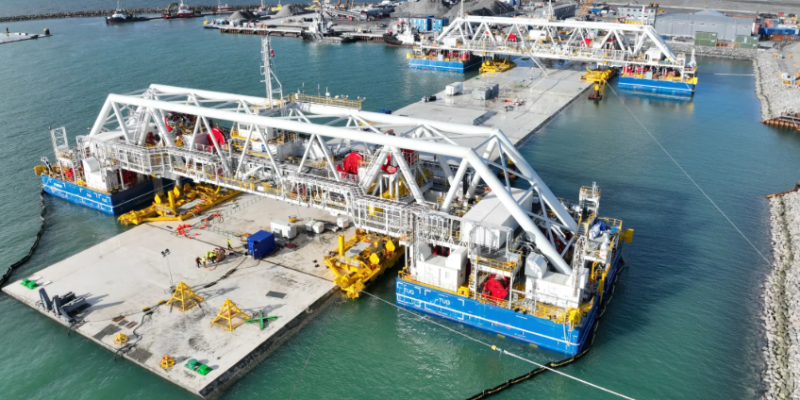
The elements will be transported and lowered into the prepared seabed trench using the purpose-built immersion vessel IVY. The vessel comprises two pontoons designed to support the concrete elements during transport and controlled immersion.
In September, IVY successfully completed a load test using the fourth standard tunnel element. An additional 1,600 tonnes was added to simulate the increased lifting forces associated with transporting the special element, which sits higher in the water.
The Fehmarnbelt Tunnel will comprise 79 standard elements and ten special elements, manufactured at the purpose-built tunnel factory in Rødbyhavn on the Danish island of Lolland.
The first standard element was immersed in May 2026, followed by the second in June, the third in August and the fourth in September. Approximately 900m of the tunnel has now been installed on the seabed.
The project has already experienced significant programme delays, mainly associated with the development and commissioning of the specialised immersion equipment. Earlier this year, project owner Sund & Bælt reported that construction was approximately two years behind schedule.
Femern A/S has not announced a revised date for the immersion of the first special element or quantified the impact of the gasket repairs on the overall construction programme.