
 By rosebell
The completed tunnel system comprises a 2.5 km intake tunnel and a 4 km outfall tunnel, extending approximately 1.6 km and 3 km offshore respectively. Once operational, the intake tunnel will convey seawater to the desalination plant for treatment, while the outfall tunnel will return concentrated brine to the ocean through a dedicated marine discharge system. According to Water Corporation, these structures represent the longest desalination intake and outfall tunnels ever constructed in Australia.
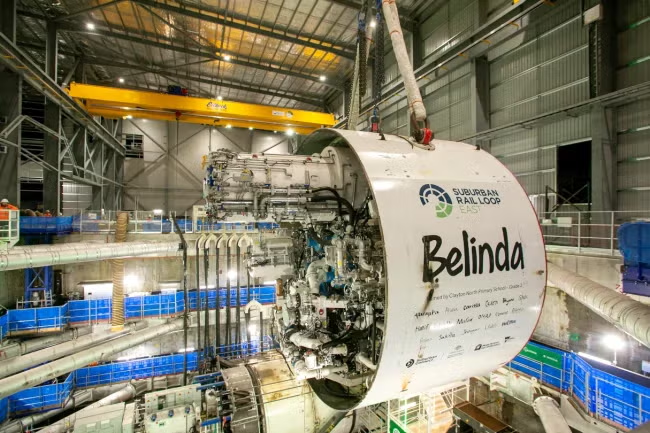
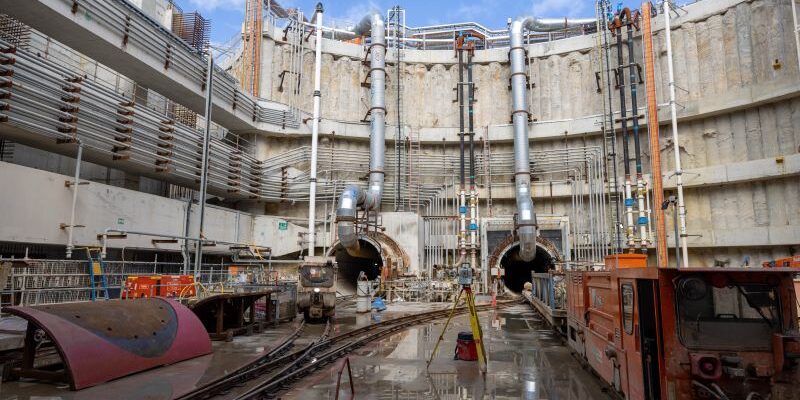
Operating around 20 m below the seabed, the 4 m diameter TBMs excavated up to 50 m per day while installing approximately 32,000 precast concrete lining segments manufactured in Western Australia. The tunnelling works were delivered by the Alkimos Seawater Alliance and are regarded as one of the most technically challenging components of the wider desalination project.
With tunnelling now complete, the two machines are being demobilised ahead of the final connection works linking the tunnels to the offshore intake and outfall structures. These marine structures were installed using Beverley, Australia’s largest registered jack-up barge. Marine exclusion zones established during offshore construction activities have also been removed, although vessel movements will continue during final inspections, surveys and commissioning activities.
The Alkimos Seawater Desalination Plant is expected to become a key element of Western Australia’s future water security strategy. The first stage of the project will have the capacity to produce 50 billion litres of drinking water annually, supplying more than 2.5 million people while helping reduce reliance on climate-affected groundwater resources. The intake and outfall tunnels have also been designed to accommodate future expansion of the plant beyond its initial capacity.
Attention now shifts to the fit-out of the plant buildings and the installation of electrical and mechanical systems across the 29-hectare project site. Supporting more than 1,500 local jobs, the facility remains on schedule to be fully operational in 2028, marking another significant step in the development of Western Australia’s next major source of drinking water.