 By rosebell
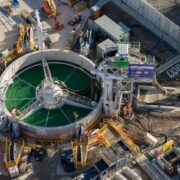
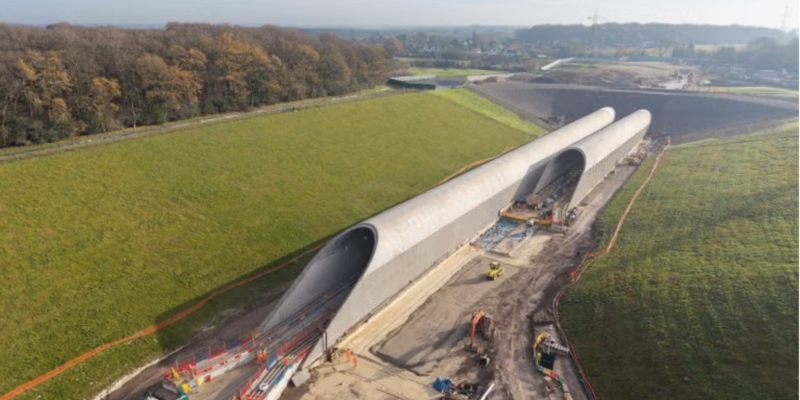
With the aim of eliminating the possibility of trains creating sonic boom when they enter the tunnel at 200mph, the porous portals on HS2’s longest tunnel are engineered and construction of these two portals on HS2’s 16km Chiltern Tunnel has been completed, whereas the date of completing the structures at the tunnel’s southern end was last year.
Considering that while construction of the southern pair wound down, Align JV commenced building the northern portals, the team reduced build time from 20 months to 12 by using lessons from the first portals.
The porous portals’ design was engineered according to the physical characteristics of the tunnel, including length and concrete track bed, plus the speed at which trains will travel through it.
According to HS2 Ltd’s head of civils, Mark Clapp: “I am proud of the team. They rose to the challenge of constructing these unique porous portals at the Chiltern Tunnel’s southern end – and then built on the experience to do even better by delivering identical structures 10 miles to the north in a little over half the time. They have clearly demonstrated the benefits that flow from retaining skilled people by providing a steady stream of work because this helps drive efficient project delivery – in short, they haven’t had to reinvent the wheel.”
“The porous portal team had demonstrated exceptional commitment and expertise over the past three years. By embracing collaboration and actively applying lessons learnt from the construction of the south porous portals, we have significantly enhanced productivity during the build of the north porous portals. These achievements not only highlight the team’s dedication to continuous improvement and innovation, but also set a benchmark for knowledge-sharing on future projects,” said Align’s porous portal lead engineer, Jean-Lou Grenard.
Due to the pulses of energy that all trains creat when entering tunnels a small release of air pressure causes into the outside world at the far end and these micro-pressure waves are inaudible on conventional railways but in high-speed rail tunnels, air pushed forward without escape routes can create powerful pressure waves that emerge as an audible thud.
In order to enabling some air pushed forward by the train to escape, making the pressure increase more gradual so the micro-pressure wave emitted from the other end of the tunnel is undetectable, the portals, one 220m long and the other 135m long, are punctuated along one side with ventilation portholes.