
 By rosebell
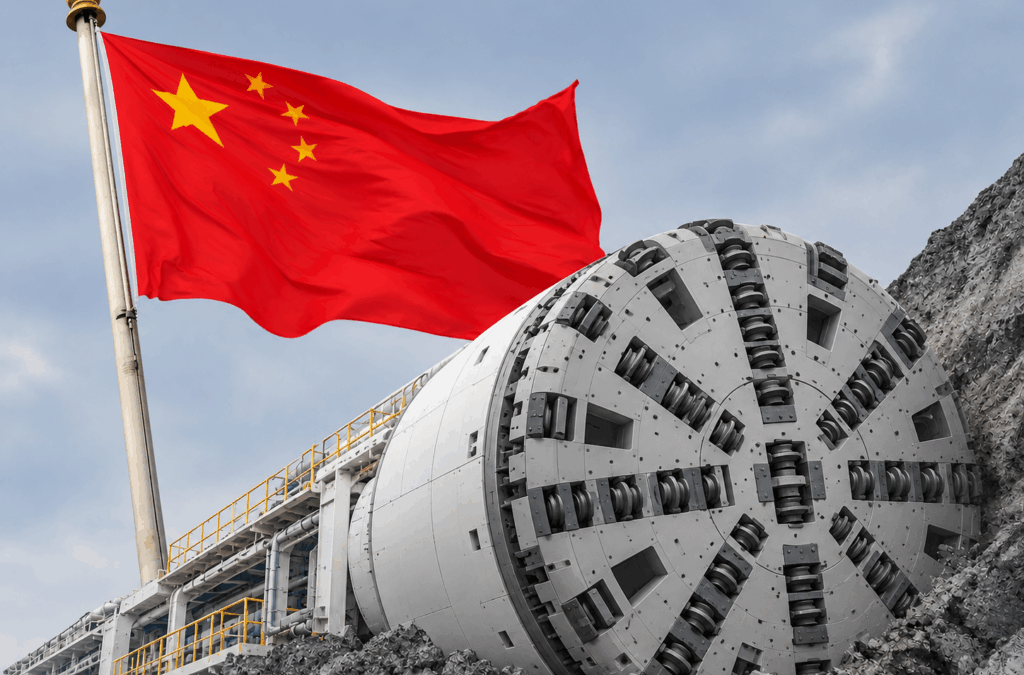
The first milestone of Ningbo-Zhoushan High-Speed Railway came on 31 August when the tunnel boring machine (TBM) Yongzhou surpassed 4,000 m of excavation from the Ningbo side of the project. The breakthrough leaves less than 1 km remaining before the machine reaches its planned offshore connection point, bringing the project closer to one of the most challenging stages of construction. The tunnelling drive forms part of the tunnel’s 11.21 km shield-driven section, where large-diameter TBMs are advancing from opposite ends beneath the seabed before carrying out a subsea docking operation.
The Jintang Undersea Tunnel extends between Ningbo’s Beilun District and Jintang Island in Zhoushan. Upon completion, it will become the world’s longest undersea high-speed railway tunnel and one of the most technically demanding rail infrastructure projects ever undertaken in China. The Ningbo-side excavation section alone stretches 4.94 km and reaches depths of up to 92 m below the seabed, requiring contractors to navigate highly complex geological conditions that include numerous transitions between hard rock and mixed ground formations.
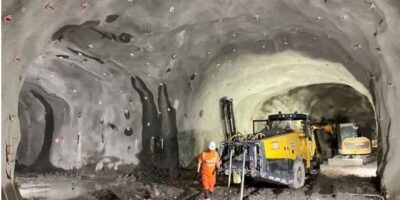
Just days later, on 4 September, the project celebrated a second major achievement with the successful breakthrough of the tunnel’s 7.83 km land section. This accomplishment marks the completion of all conventional excavation works associated with the land-based portion of the tunnel, allowing project teams to focus on advancing the remaining subsea sections toward their eventual connection beneath the East China Sea.
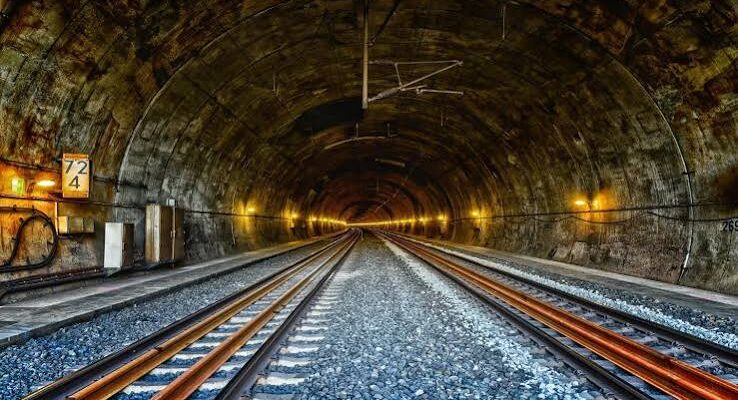
The tunnel is being constructed as a single-bore, double-track railway tunnel designed for train speeds of up to 250 km/h. Once operational, the line will significantly improve regional connectivity between Ningbo and the Zhoushan archipelago, reducing journey times and, for the first time, providing Zhoushan with a direct railway connection to China’s national rail network. Travel between Ningbo and Zhoushan is expected to take as little as 26 minutes by high-speed rail.
Construction of the subsea section has required the deployment of advanced tunnelling technologies, including high-precision guidance systems, specialised geological forecasting equipment and artificial intelligence-powered monitoring tools capable of analysing tunnelling data in real time. Engineers are also utilising a domestically developed maintenance system described as a “deep-sea space station” to support operations in the challenging offshore environment.
With the land section complete and the Yongzhou TBM steadily approaching its offshore rendezvous point, the focus now turns to the successful completion of the twin TBM drives and the highly complex subsea docking operation that will ultimately unite the tunnel beneath the seabed. Achievement of these latest milestones represents another important step towards delivering one of the most significant railway infrastructure projects currently under construction in Asia.